A connector can fail without looking obviously broken. Terminals can spread, back out of the housing, corrode, overheat, lose spring tension, or become contaminated by water or oil. Intermittent electrical problems often live at connectors because vibration and temperature changes repeatedly stress them.
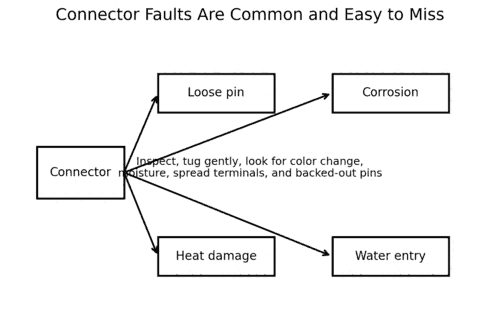
Inspect both halves of the connector. Look for green or white corrosion, darkened terminals, melted plastic, bent pins, moisture, seals that are out of place, and wires that pull backward when lightly tugged. Compare suspicious terminals with neighboring ones.
What to Look For
Compare both sides of the circuit whenever possible. Two similar lamps, two power windows, or left and right wheel sensors can provide a useful reference when one side behaves differently.
Do not scrape or bend terminals aggressively. Many modern low-current signal terminals are delicate. The correct repair may require replacement terminals and proper crimping tools rather than twisting wires together.
If movement of a connector changes the symptom, that is valuable evidence—but do not stop there. Determine whether the fault is the pin fit, wire crimp, internal conductor, water damage, or component connection.
Beginner Diagnostic Checklist
- Verify the exact symptom before touching anything.
- Check battery condition and obvious power/ground connections when relevant.
- Check the correct fuse and connector condition.
Stop and get help if: wiring is overheating, smoking, melting, or repeatedly blowing a high-current fuse.