Exterior lighting circuits are excellent beginner diagnostic systems because the symptoms are visible and many circuits can be tested safely with a meter. Begin by identifying exactly which functions fail and which still work.
A single failed lamp suggests a local bulb, socket, connector, or ground issue. Multiple lamps on one side may share a ground. All brake lights failing may point toward the brake switch, fuse, module input, or control circuit. Fast turn-signal flashing on some vehicles can indicate a lamp load problem.
What to Look For
Compare both sides of the circuit whenever possible. Two similar lamps, two power windows, or left and right wheel sensors can provide a useful reference when one side behaves differently.
Corroded bulb sockets and trailer wiring are frequent causes of lighting issues. Trailer adapters, tow-bar modules, and aftermarket lighting splices should always be considered when the rear lighting behaves strangely.
If a lamp glows when another function is activated—for example a tail lamp changes brightness when braking—suspect a shared ground problem or incorrect current path.
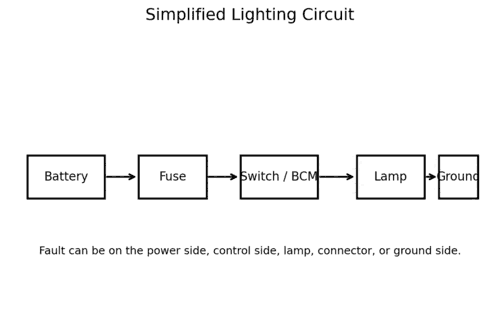
Beginner Diagnostic Checklist
- Verify the exact symptom before touching anything.
- Check battery condition and obvious power/ground connections when relevant.
- Check the correct fuse and connector condition.
Stop and get help if: wiring is overheating, smoking, melting, or repeatedly blowing a high-current fuse.