Engine coolant temperature, intake air temperature, transmission fluid temperature and many cabin-temperature sensors use thermistors. A thermistor changes resistance as temperature changes. The most common automotive type is NTC, or negative temperature coefficient, meaning resistance falls as temperature rises.
The ECU normally provides a pull-up voltage through an internal resistor. The thermistor and ECU resistor form a voltage divider. When the thermistor resistance changes, the signal voltage changes. The scan tool then displays a temperature calculated from that voltage.
This creates useful plausibility checks. After the vehicle has sat overnight, coolant temperature, intake-air temperature and ambient temperature should usually be reasonably close. If the coolant sensor says 120°C before the engine has started, the value is physically impossible even before you reach for a meter. An open circuit and a short circuit often drive the displayed value to opposite extremes, though the exact default depends on the design.
For diagnosis, compare cold-soak values, watch the temperature rise smoothly during warm-up, inspect connectors for coolant or oil contamination and use resistance charts only when the manufacturer provides the correct specification. Replacing a thermostat will not fix an electrical temperature reading that jumps instantly; replacing a sensor will not fix a cooling system that is genuinely overheating.
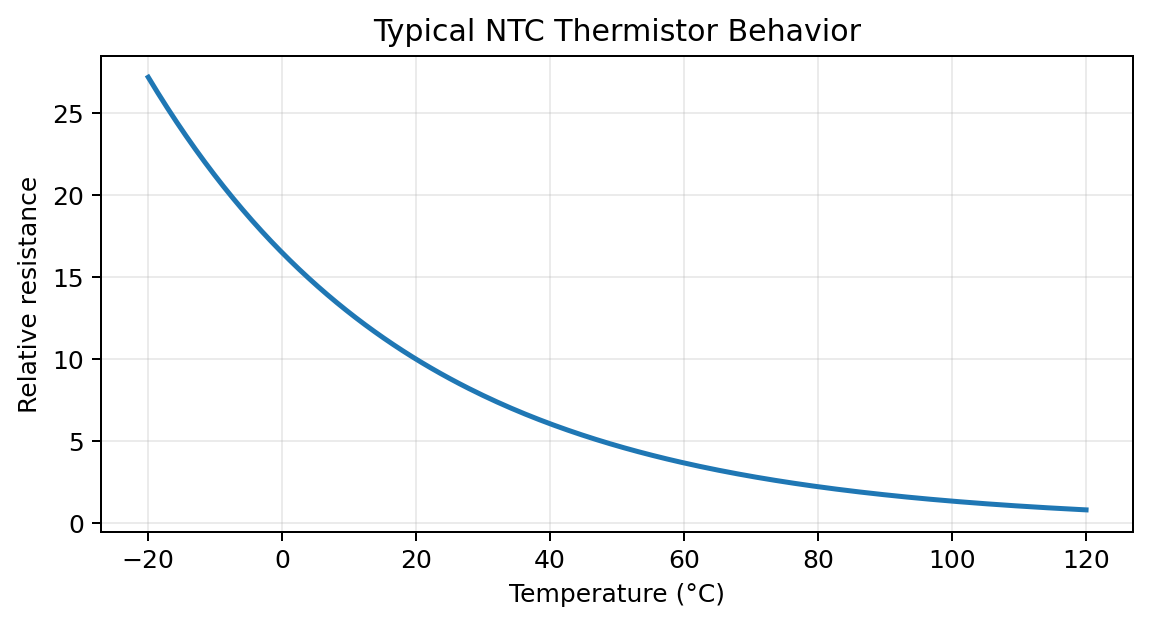
Figure: Thermistors and Temperature Sensors