A digital multimeter is excellent for verifying sensor power, ground, static signal voltage and voltage drop. It is less suitable for seeing the exact shape of fast digital pulses. That limitation does not make it useless; it simply means you should ask the meter questions it can answer reliably.
Back-probing a connected circuit lets you observe the sensor while it is powered and loaded. Use thin back-probe pins and avoid spreading terminals. Never jam a standard meter probe into a sealed connector. Piercing insulation creates a future corrosion point and should be avoided unless an approved repair procedure calls for it.
Resistance mode is for de-energized components and circuits. Applying an ohmmeter across a powered electronic circuit can produce invalid readings or damage equipment. Many modern sensors contain electronics, so a resistance value may not have useful meaning even with power removed.
For ground testing, a voltage-drop measurement under operating conditions is often stronger evidence than a continuity beep. A connection can pass the tiny current used by continuity mode yet fail when the sensor or actuator is actually working.
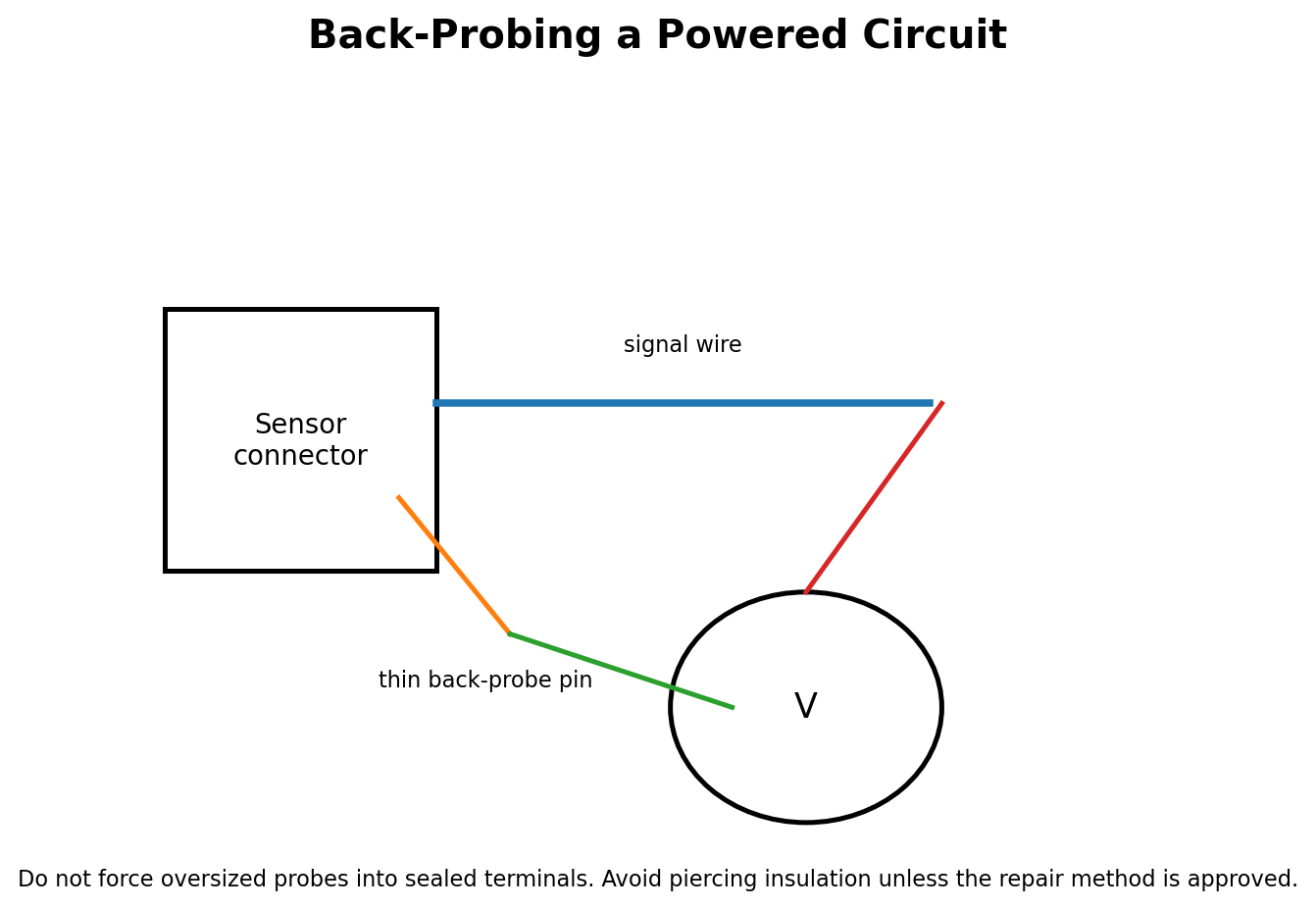
Figure: Multimeter Testing Around Sensors
Diagnostic habit: Compare the sensor reading with reality and with at least one related measurement before buying a part.