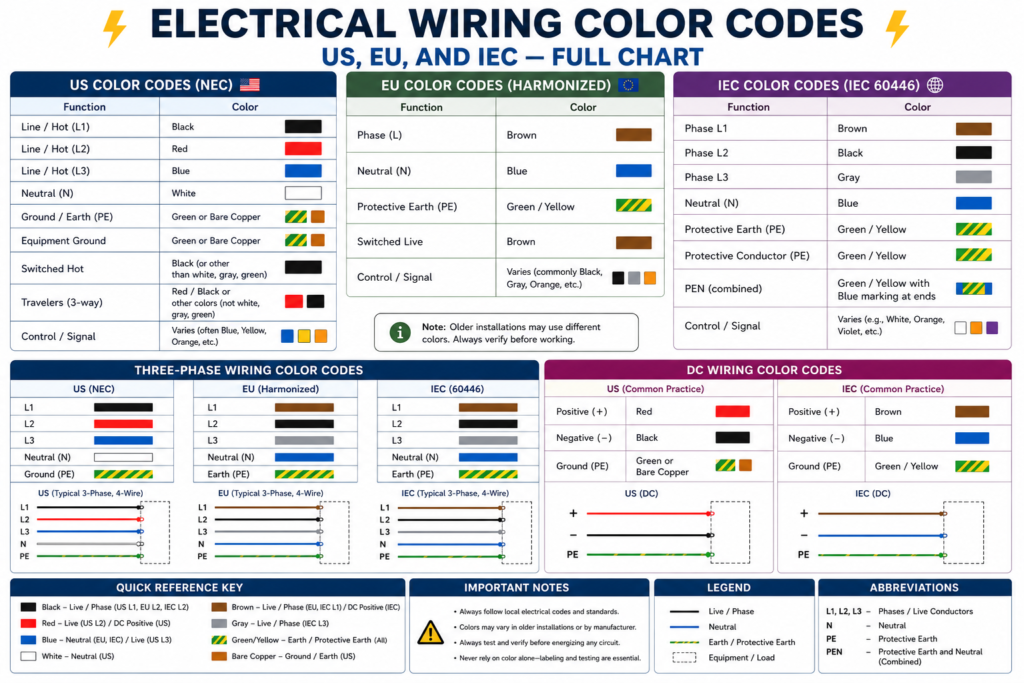
Electrical wire colors help electricians and technicians identify live conductors, neutral wires, protective earth connections and DC polarity quickly.
However, color alone should never be treated as proof that a conductor is safe or correctly connected. Wiring conventions differ between countries, standards, equipment manufacturers and installation periods. Older buildings and industrial machines may also use colors that are no longer standard.
The chart below compares commonly used electrical wiring colors in the United States, the European Union and IEC-based installations. It includes single-phase wiring, three-phase conductors, neutral, protective earth, DC wiring and common control-wire colors.
How to Use This Wiring Color Chart
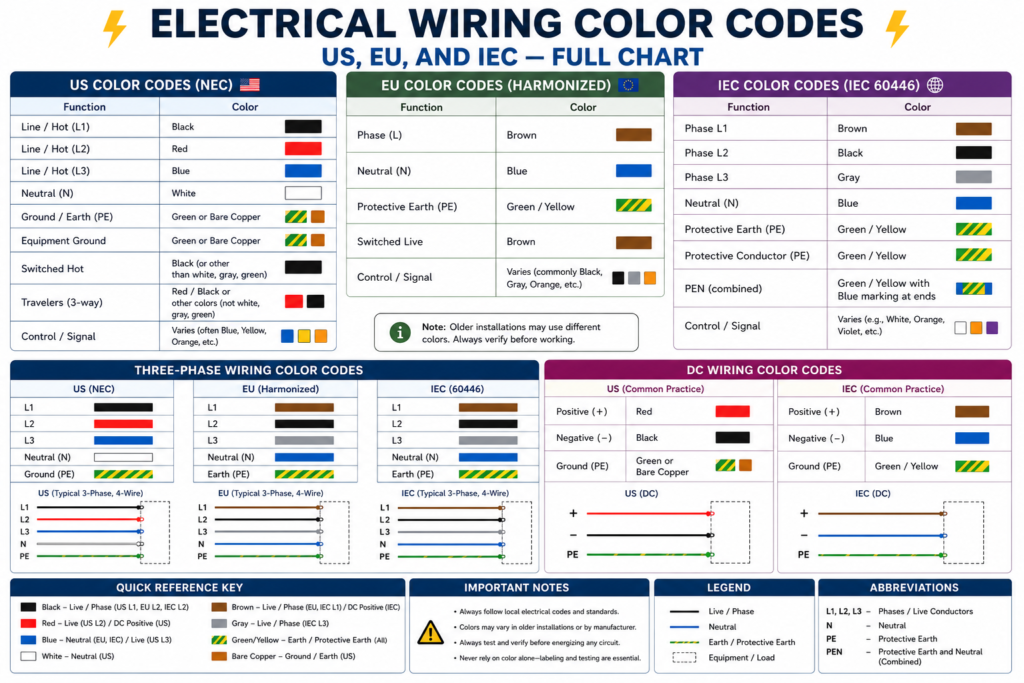
Use the chart as a quick reference when reading diagrams, inspecting control panels or identifying unfamiliar wiring.
The most common modern European and IEC arrangement is:
- Brown: L1 or live
- Black: L2
- Grey: L3
- Blue: Neutral
- Green/yellow: Protective earth
In the United States, white or grey is generally used for the grounded neutral conductor, while green, green/yellow or bare copper identifies equipment grounding conductors. Black, red and blue are commonly used for three-phase conductors, but the exact phase-color arrangement can differ between installations.
Control, signal and switched conductors may use other colors. Their function should be confirmed using the electrical drawing, terminal labels and equipment documentation.
Important Safety Warning
Never identify a conductor by color alone.
Before touching electrical wiring:
- isolate the circuit correctly;
- follow lockout and tagout procedures where required;
- verify the absence of voltage with suitable test equipment;
- inspect the wiring diagram;
- follow the electrical code applicable to the installation.
Previous repairs, imported machinery, faded insulation and older wiring standards can all produce unexpected color combinations.
When the wire color and drawing disagree, stop and test before proceeding.