By Dovydas Kersys · Chapter 5 of 12 in Pneumatic Troubleshooting.
Before you begin: The diagrams are simplified teaching illustrations. Verify the actual machine schematic and component documentation. Isolate and control stored energy before intrusive work, and use the approved machine procedure for any energized measurements. Compressed air must not be the sole support for a load where unexpected movement could cause injury.
Tubing Diameter and Length
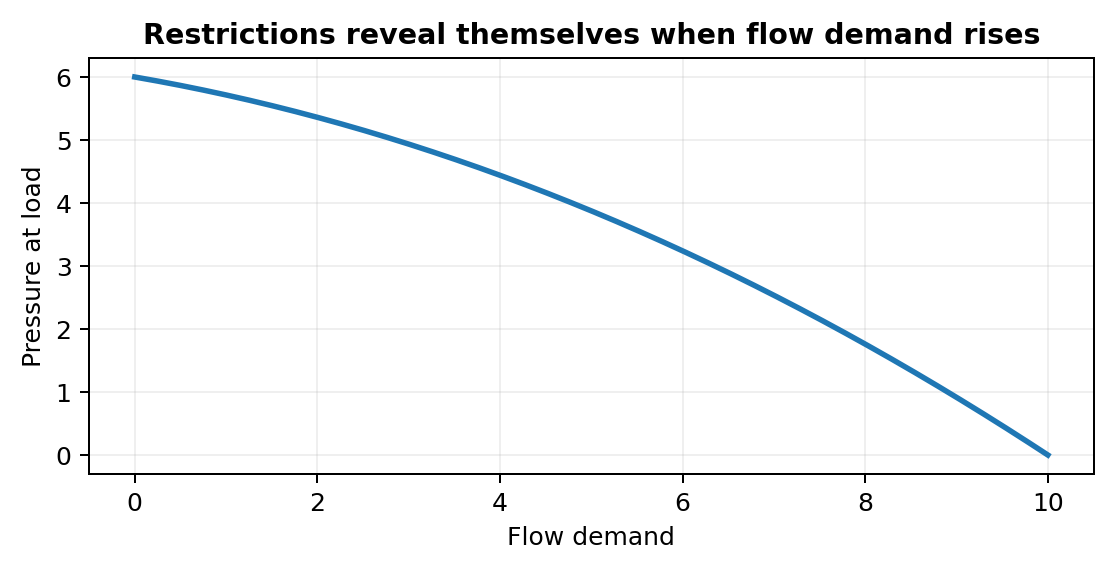
Small-bore or long tubing delays pressure buildup and increases dynamic pressure drop. Supply-side faults often look normal when the machine is idle because pressure has time to equalize; they become obvious only when airflow increases.
What to check
- Record static and dynamic pressure.
- Measure before and after the suspected restriction.
- Check isolation valves, filters, regulators, couplings, and shared supply lines.
- See whether other machines or simultaneous actuators change the symptom.
Diagnostic sequence
- Measure machine inlet pressure during the fault.
- If inlet pressure is low, move upstream toward the plant supply.
- If inlet is good, compare pressure across local preparation components.
- Correct the first point where pressure drops abnormally under flow.
Common mistakes
Turning the regulator higher to hide a restriction. • Trusting one panel gauge. • Ignoring shared plant demand.
FIELD RULE: Pressure drop is a flow-dependent fault; measure while air is moving.
Push-In Fitting Leaks
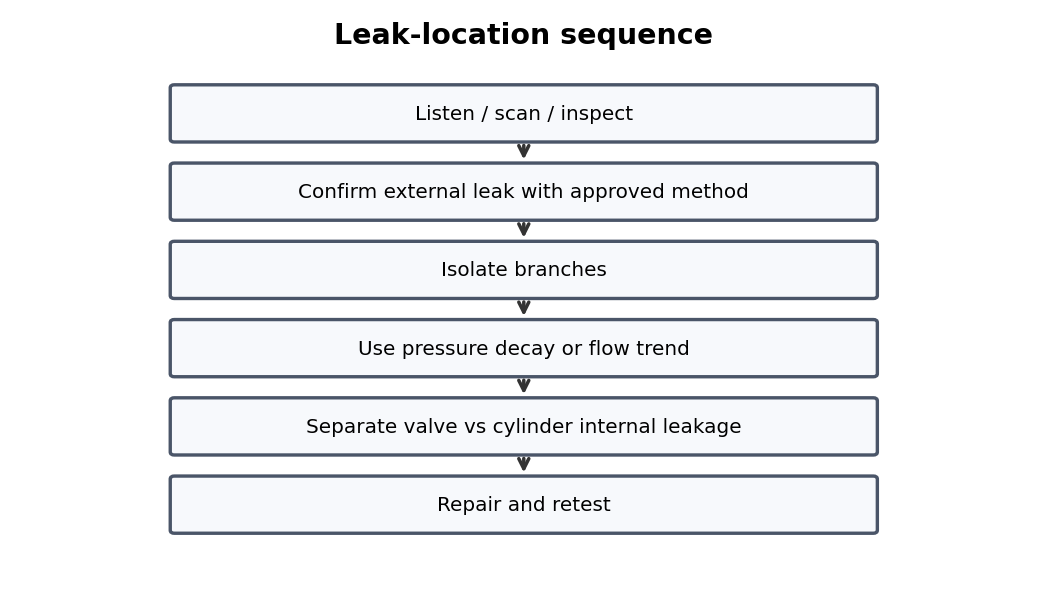
Scratched, angled, wrong-size, or incompletely inserted tubing creates persistent fitting leakage. Supply-side faults often look normal when the machine is idle because pressure has time to equalize; they become obvious only when airflow increases.
What to check
- Record static and dynamic pressure.
- Measure before and after the suspected restriction.
- Check isolation valves, filters, regulators, couplings, and shared supply lines.
- See whether other machines or simultaneous actuators change the symptom.
Diagnostic sequence
- Measure machine inlet pressure during the fault.
- If inlet pressure is low, move upstream toward the plant supply.
- If inlet is good, compare pressure across local preparation components.
- Correct the first point where pressure drops abnormally under flow.
Common mistakes
Turning the regulator higher to hide a restriction. • Trusting one panel gauge. • Ignoring shared plant demand.
FIELD RULE: Pressure drop is a flow-dependent fault; measure while air is moving.
Threaded Fittings and Sealant
Wrong threads, over-tightening, or excessive PTFE tape can create leaks and contamination inside pilot passages. Supply-side faults often look normal when the machine is idle because pressure has time to equalize; they become obvious only when airflow increases.
What to check
- Record static and dynamic pressure.
- Measure before and after the suspected restriction.
- Check isolation valves, filters, regulators, couplings, and shared supply lines.
- See whether other machines or simultaneous actuators change the symptom.
Diagnostic sequence
- Measure machine inlet pressure during the fault.
- If inlet pressure is low, move upstream toward the plant supply.
- If inlet is good, compare pressure across local preparation components.
- Correct the first point where pressure drops abnormally under flow.
Common mistakes
Turning the regulator higher to hide a restriction. • Trusting one panel gauge. • Ignoring shared plant demand.
FIELD RULE: Pressure drop is a flow-dependent fault; measure while air is moving.
Kinked or Collapsed Hose
A flexible hose can fail internally and restrict flow without leaking externally. Supply-side faults often look normal when the machine is idle because pressure has time to equalize; they become obvious only when airflow increases.
What to check
- Record static and dynamic pressure.
- Measure before and after the suspected restriction.
- Check isolation valves, filters, regulators, couplings, and shared supply lines.
- See whether other machines or simultaneous actuators change the symptom.
Diagnostic sequence
- Measure machine inlet pressure during the fault.
- If inlet pressure is low, move upstream toward the plant supply.
- If inlet is good, compare pressure across local preparation components.
- Correct the first point where pressure drops abnormally under flow.
Common mistakes
Turning the regulator higher to hide a restriction. • Trusting one panel gauge. • Ignoring shared plant demand.
FIELD RULE: Pressure drop is a flow-dependent fault; measure while air is moving.
Quick Coupler Flow Loss
Mismatched or undersized quick couplers can become major restrictions on high-flow functions. Supply-side faults often look normal when the machine is idle because pressure has time to equalize; they become obvious only when airflow increases.
What to check
- Record static and dynamic pressure.
- Measure before and after the suspected restriction.
- Check isolation valves, filters, regulators, couplings, and shared supply lines.
- See whether other machines or simultaneous actuators change the symptom.
Diagnostic sequence
- Measure machine inlet pressure during the fault.
- If inlet pressure is low, move upstream toward the plant supply.
- If inlet is good, compare pressure across local preparation components.
- Correct the first point where pressure drops abnormally under flow.
Common mistakes
Turning the regulator higher to hide a restriction. • Trusting one panel gauge. • Ignoring shared plant demand.
FIELD RULE: Pressure drop is a flow-dependent fault; measure while air is moving.
External Leak Detection
Hearing, approved leak solution, ultrasound, and branch isolation each answer different leak-location questions. Good pneumatic troubleshooting depends on measurements taken at the correct location and during the failing condition, with rated test equipment and controlled stored energy.
What to check
- Use a suitable pressure/flow range.
- Install test equipment only after safe depressurization where required.
- Measure locally and dynamically.
- Record results before changing settings.
Diagnostic sequence
- Define the question the measurement must answer.
- Place the test point on each side of the suspected component.
- Run the exact failing condition.
- Compare values and move the test point based on the result.
Common mistakes
Testing only at idle. • Using an inaccurate or badly ranged gauge. • Creating a new restriction with test fittings.
FIELD RULE: Measure where the physics is happening, not where the nearest gauge happens to be.
Common Exhaust Backpressure
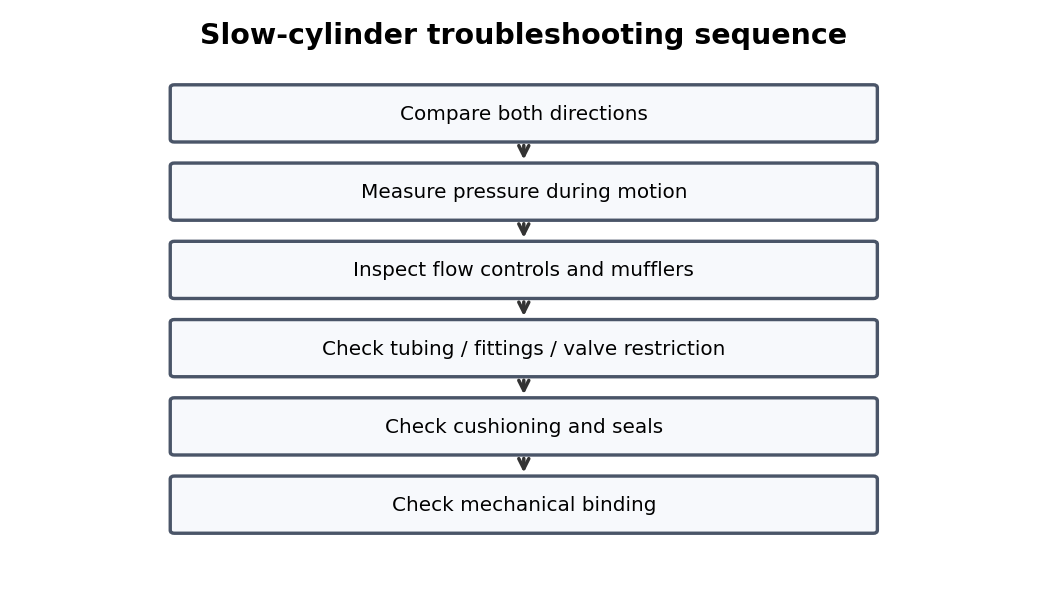
A shared manifold exhaust restriction may slow several actuators only when they move together. A valve must receive a correct command, shift mechanically, route pressure to the intended work port, and provide a free exhaust path from the opposite side.
What to check
- Verify valve function and normal/center state.
- Measure coil voltage or pilot pressure while commanded.
- Check supply, work ports, and exhausts.
- Inspect manual override, spool contamination, and mufflers.
Diagnostic sequence
- Confirm electrical/air pilot command.
- Confirm the spool actually changes port pressures.
- If port pressure is wrong, troubleshoot the valve/pilot.
- If port pressure is correct, continue downstream to tubing and actuator.
Common mistakes
Assuming a click or LED proves switching. • Blocking exhaust to reduce noise. • Replacing with a visually similar but functionally different valve.
FIELD RULE: Sound and LEDs are clues; port pressure is evidence.
Pneumatic Silencers
Silencers can become saturated with oil, dust, or water and silently turn into exhaust restrictions. A valve must receive a correct command, shift mechanically, route pressure to the intended work port, and provide a free exhaust path from the opposite side.
What to check
- Verify valve function and normal/center state.
- Measure coil voltage or pilot pressure while commanded.
- Check supply, work ports, and exhausts.
- Inspect manual override, spool contamination, and mufflers.
Diagnostic sequence
- Confirm electrical/air pilot command.
- Confirm the spool actually changes port pressures.
- If port pressure is wrong, troubleshoot the valve/pilot.
- If port pressure is correct, continue downstream to tubing and actuator.
Common mistakes
Assuming a click or LED proves switching. • Blocking exhaust to reduce noise. • Replacing with a visually similar but functionally different valve.
FIELD RULE: Sound and LEDs are clues; port pressure is evidence.
Restrictive Cylinder Fittings
Small elbows, reducers, and compact flow-control fittings at the cylinder can dominate the circuit pressure drop. Supply-side faults often look normal when the machine is idle because pressure has time to equalize; they become obvious only when airflow increases.
What to check
- Record static and dynamic pressure.
- Measure before and after the suspected restriction.
- Check isolation valves, filters, regulators, couplings, and shared supply lines.
- See whether other machines or simultaneous actuators change the symptom.
Diagnostic sequence
- Measure machine inlet pressure during the fault.
- If inlet pressure is low, move upstream toward the plant supply.
- If inlet is good, compare pressure across local preparation components.
- Correct the first point where pressure drops abnormally under flow.
Common mistakes
Turning the regulator higher to hide a restriction. • Trusting one panel gauge. • Ignoring shared plant demand.
FIELD RULE: Pressure drop is a flow-dependent fault; measure while air is moving.
Tubing on Moving Machinery
Repeated flexing and abrasion create intermittent leaks and kinks that appear only at specific machine positions. Preventive pneumatic maintenance works best when it preserves known-good settings, removes leaks and contamination, and records baseline pressures and cycle times.
What to check
- Inspect for leaks, damaged tubing, loose mounts, and contamination.
- Check dynamic pressure and critical cycle times.
- Preserve documented flow-control and regulator settings.
- Record recurring failure locations and component changes.
Diagnostic sequence
- Inspect with machine in a controlled state.
- Measure before adjusting.
- Repair defects using correct rated parts.
- Recommission slowly and verify safety functions.
- Update maintenance records.
Common mistakes
Adjusting every valve during PM. • Replacing by appearance instead of specification. • Recording only “part replaced.”
FIELD RULE: Preventive maintenance should create better baseline data, not new unknown settings.
Appendix D – Leak Checklist
- External fittings and tubes.
- Cylinder rod-seal leakage.
- Piston bypass.
- Valve exhaust/internal leakage.
- Manifold seals.
- Vacuum cups and tubing.
- Pressure-decay baseline after repairs.
USE IT: Add machine-specific target pressures, cycle times, and test points to this page.
Measure pressure where the work happens.
Follow the air path. Prove the fault.
Continue the series
- Previous chapter: Pneumatic Cylinders And Actuators
- Next chapter: Electro-Pneumatic Control
- Browse all Pneumatic Troubleshooting chapters
Adapted from Pneumatic Troubleshooting for Maintenance Technicians, by Dovydas Kersys. © 2026 Dovydas Kersys. Featured cover image is an AI-generated editorial illustration.