Beginner question: What can I safely prove before buying any part?
An OBD-II scanner is useful for electrical diagnosis because it can reveal low-voltage faults, communication faults, sensor circuit codes, actuator circuit codes, and data that shows whether a module is receiving a plausible signal.
A fault code is not a parts-replacement instruction. A code describing a sensor circuit may be caused by the sensor, damaged wiring, missing reference voltage, poor ground, connector corrosion, or even another component pulling down a shared circuit.
What to Look For
Work from the symptom outward. Note what still works, what fails at the same time, and whether the fault changes with heat, vibration, rain, or electrical load. These observations often tell you where to measure first.
Freeze-frame data can show the conditions when an engine code set. Live data can help confirm whether a sensor changes logically. Module scans can reveal communication patterns, such as several modules losing contact with one specific controller.
Record codes before clearing them. Clearing codes can erase useful evidence and reset monitors. Diagnose first; clear after repairs or when the test procedure requires it.
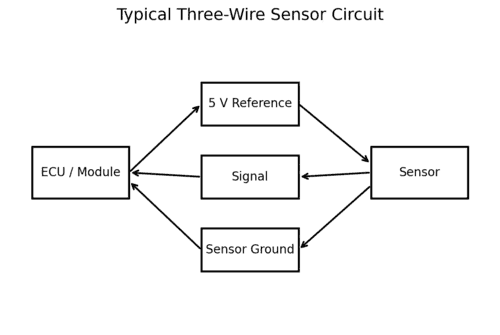
Beginner Diagnostic Checklist
- Verify the exact symptom before touching anything.
- Check battery condition and obvious power/ground connections when relevant.
- Check the correct fuse and connector condition.
Stop and get help if: airbag, high-voltage, or safety-critical circuitry is involved.