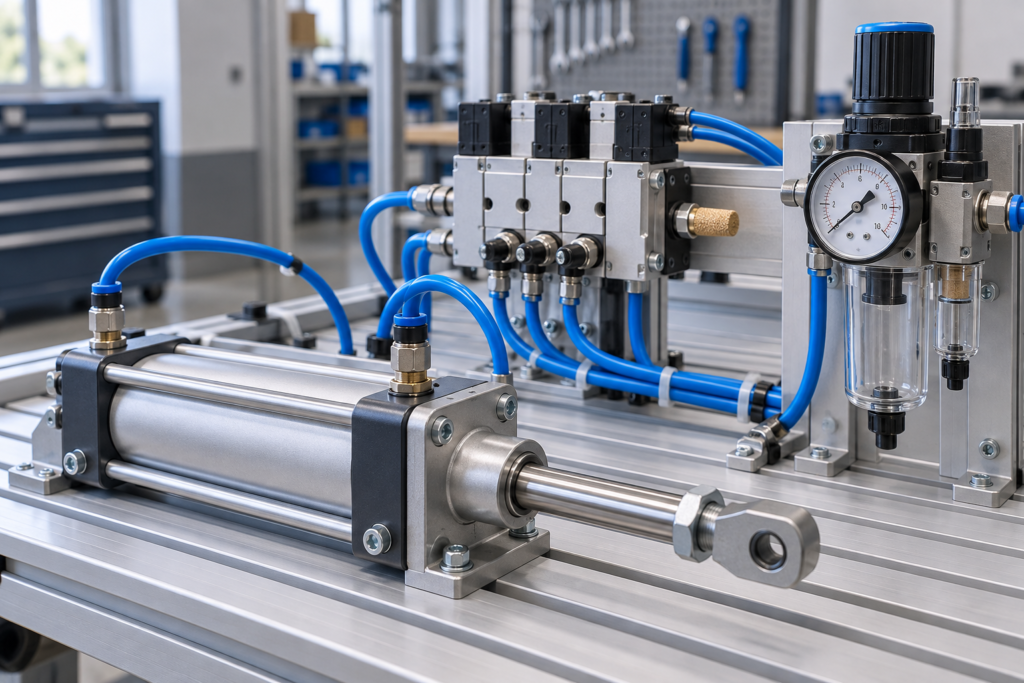
By Dovydas Kersys · Chapter 9 of 12 in Pneumatic Troubleshooting.
Before you begin: The diagrams are simplified teaching illustrations. Verify the actual machine schematic and component documentation. Isolate and control stored energy before intrusive work, and use the approved machine procedure for any energized measurements. Compressed air must not be the sole support for a load where unexpected movement could cause injury.
Particle Contamination
Rust, pipe scale, tape fragments, and dust can block tiny pilot passages and damage spool sealing. Preventive pneumatic maintenance works best when it preserves known-good settings, removes leaks and contamination, and records baseline pressures and cycle times.
What to check
- Inspect for leaks, damaged tubing, loose mounts, and contamination.
- Check dynamic pressure and critical cycle times.
- Preserve documented flow-control and regulator settings.
- Record recurring failure locations and component changes.
Diagnostic sequence
- Inspect with machine in a controlled state.
- Measure before adjusting.
- Repair defects using correct rated parts.
- Recommission slowly and verify safety functions.
- Update maintenance records.
Common mistakes
Adjusting every valve during PM. • Replacing by appearance instead of specification. • Recording only “part replaced.”
FIELD RULE: Preventive maintenance should create better baseline data, not new unknown settings.
Compressor Oil Carryover
Unexpected oil downstream can foul filters, silencers, vacuum generators, sensors, and seals. Preventive pneumatic maintenance works best when it preserves known-good settings, removes leaks and contamination, and records baseline pressures and cycle times.
What to check
- Inspect for leaks, damaged tubing, loose mounts, and contamination.
- Check dynamic pressure and critical cycle times.
- Preserve documented flow-control and regulator settings.
- Record recurring failure locations and component changes.
Diagnostic sequence
- Inspect with machine in a controlled state.
- Measure before adjusting.
- Repair defects using correct rated parts.
- Recommission slowly and verify safety functions.
- Update maintenance records.
Common mistakes
Adjusting every valve during PM. • Replacing by appearance instead of specification. • Recording only “part replaced.”
FIELD RULE: Preventive maintenance should create better baseline data, not new unknown settings.
Cold-Weather Icing
Moist air expanding through exhausts can freeze and create intermittent restrictions in cold environments. Preventive pneumatic maintenance works best when it preserves known-good settings, removes leaks and contamination, and records baseline pressures and cycle times.
What to check
- Inspect for leaks, damaged tubing, loose mounts, and contamination.
- Check dynamic pressure and critical cycle times.
- Preserve documented flow-control and regulator settings.
- Record recurring failure locations and component changes.
Diagnostic sequence
- Inspect with machine in a controlled state.
- Measure before adjusting.
- Repair defects using correct rated parts.
- Recommission slowly and verify safety functions.
- Update maintenance records.
Common mistakes
Adjusting every valve during PM. • Replacing by appearance instead of specification. • Recording only “part replaced.”
FIELD RULE: Preventive maintenance should create better baseline data, not new unknown settings.
Heat and Seal Aging
High temperature hardens tubing and seals and can create faults only after hours of operation. Preventive pneumatic maintenance works best when it preserves known-good settings, removes leaks and contamination, and records baseline pressures and cycle times.
What to check
- Inspect for leaks, damaged tubing, loose mounts, and contamination.
- Check dynamic pressure and critical cycle times.
- Preserve documented flow-control and regulator settings.
- Record recurring failure locations and component changes.
Diagnostic sequence
- Inspect with machine in a controlled state.
- Measure before adjusting.
- Repair defects using correct rated parts.
- Recommission slowly and verify safety functions.
- Update maintenance records.
Common mistakes
Adjusting every valve during PM. • Replacing by appearance instead of specification. • Recording only “part replaced.”
FIELD RULE: Preventive maintenance should create better baseline data, not new unknown settings.
Washdown and Chemicals
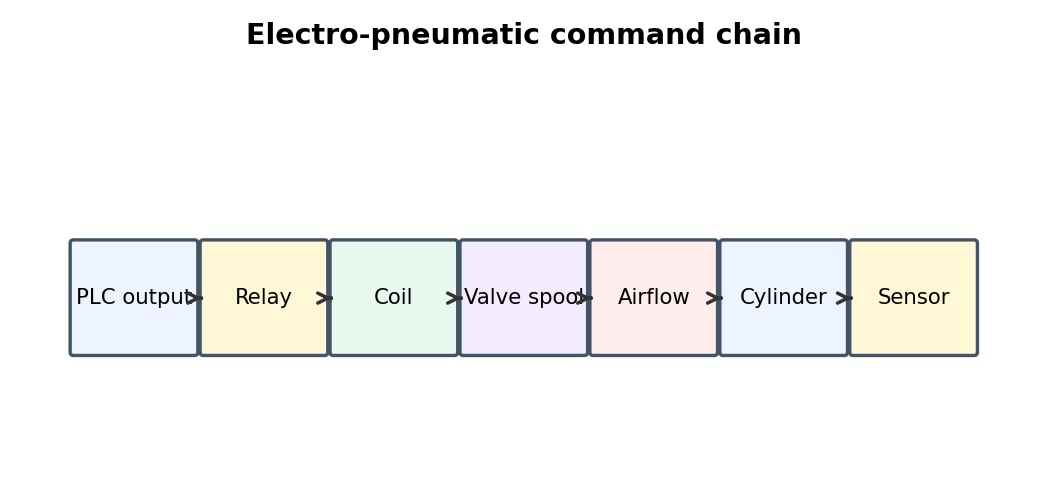
Water ingress and incompatible chemicals can attack connectors, tubing, and valve seals. Preventive pneumatic maintenance works best when it preserves known-good settings, removes leaks and contamination, and records baseline pressures and cycle times.
What to check
- Inspect for leaks, damaged tubing, loose mounts, and contamination.
- Check dynamic pressure and critical cycle times.
- Preserve documented flow-control and regulator settings.
- Record recurring failure locations and component changes.
Diagnostic sequence
- Inspect with machine in a controlled state.
- Measure before adjusting.
- Repair defects using correct rated parts.
- Recommission slowly and verify safety functions.
- Update maintenance records.
Common mistakes
Adjusting every valve during PM. • Replacing by appearance instead of specification. • Recording only “part replaced.”
FIELD RULE: Preventive maintenance should create better baseline data, not new unknown settings.
Leak Rate as a Condition Signal
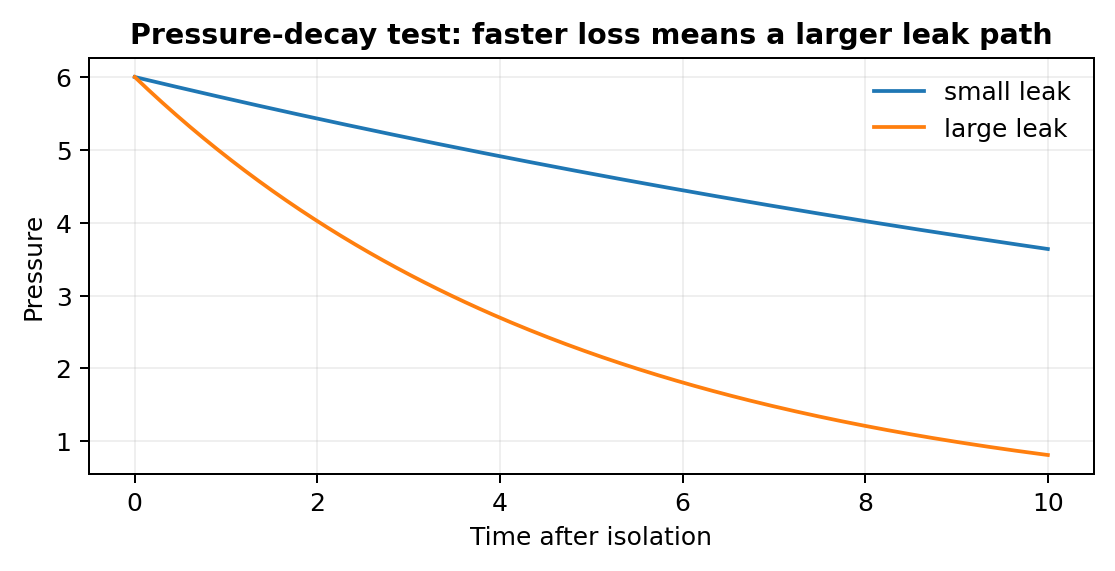
Growing leakage can be trended as a predictive indicator of seal, valve, and tubing deterioration. Preventive pneumatic maintenance works best when it preserves known-good settings, removes leaks and contamination, and records baseline pressures and cycle times.
What to check
- Inspect for leaks, damaged tubing, loose mounts, and contamination.
- Check dynamic pressure and critical cycle times.
- Preserve documented flow-control and regulator settings.
- Record recurring failure locations and component changes.
Diagnostic sequence
- Inspect with machine in a controlled state.
- Measure before adjusting.
- Repair defects using correct rated parts.
- Recommission slowly and verify safety functions.
- Update maintenance records.
Common mistakes
Adjusting every valve during PM. • Replacing by appearance instead of specification. • Recording only “part replaced.”
FIELD RULE: Preventive maintenance should create better baseline data, not new unknown settings.
Repeated Valve Failures
Repeat failures should trigger investigation of air quality, voltage, pilot pressure, temperature, sizing, and exhaust conditions. Preventive pneumatic maintenance works best when it preserves known-good settings, removes leaks and contamination, and records baseline pressures and cycle times.
What to check
- Inspect for leaks, damaged tubing, loose mounts, and contamination.
- Check dynamic pressure and critical cycle times.
- Preserve documented flow-control and regulator settings.
- Record recurring failure locations and component changes.
Diagnostic sequence
- Inspect with machine in a controlled state.
- Measure before adjusting.
- Repair defects using correct rated parts.
- Recommission slowly and verify safety functions.
- Update maintenance records.
Common mistakes
Adjusting every valve during PM. • Replacing by appearance instead of specification. • Recording only “part replaced.”
FIELD RULE: Preventive maintenance should create better baseline data, not new unknown settings.
Spare-Part Compatibility
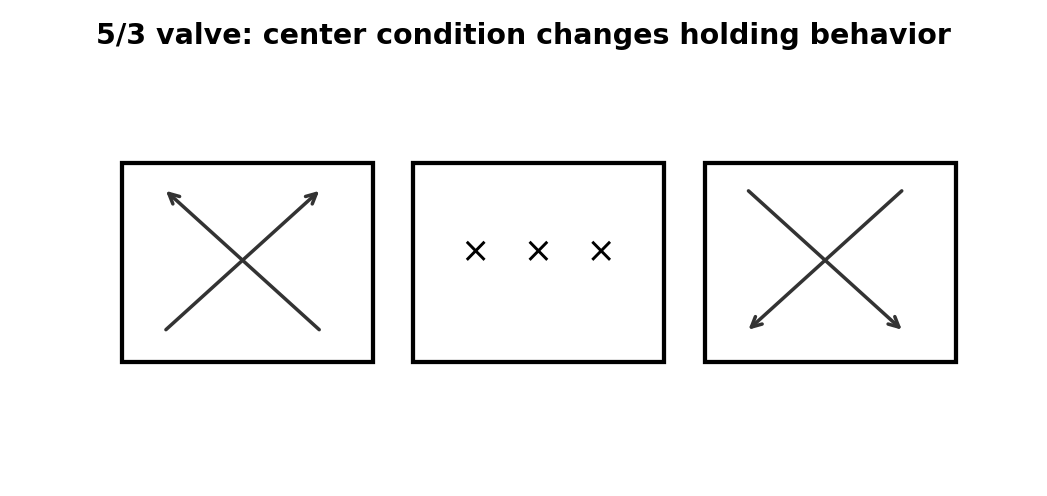
A part is a true spare only when its function, ratings, porting, seals, and voltage match the original requirement. Preventive pneumatic maintenance works best when it preserves known-good settings, removes leaks and contamination, and records baseline pressures and cycle times.
What to check
- Inspect for leaks, damaged tubing, loose mounts, and contamination.
- Check dynamic pressure and critical cycle times.
- Preserve documented flow-control and regulator settings.
- Record recurring failure locations and component changes.
Diagnostic sequence
- Inspect with machine in a controlled state.
- Measure before adjusting.
- Repair defects using correct rated parts.
- Recommission slowly and verify safety functions.
- Update maintenance records.
Common mistakes
Adjusting every valve during PM. • Replacing by appearance instead of specification. • Recording only “part replaced.”
FIELD RULE: Preventive maintenance should create better baseline data, not new unknown settings.
Continue the series
- Previous chapter: Pneumatic Symptom-Based Troubleshooting
- Next chapter: Vacuum Pneumatics
- Browse all Pneumatic Troubleshooting chapters
Adapted from Pneumatic Troubleshooting for Maintenance Technicians, by Dovydas Kersys. © 2026 Dovydas Kersys. Featured cover image is an AI-generated editorial illustration.