By Dovydas Kersys · Chapter 8 of 12 in Pneumatic Troubleshooting.
Before you begin: The diagrams are simplified teaching illustrations. Verify the actual machine schematic and component documentation. Isolate and control stored energy before intrusive work, and use the approved machine procedure for any energized measurements. Compressed air must not be the sole support for a load where unexpected movement could cause injury.
Machine Has No Air Pressure
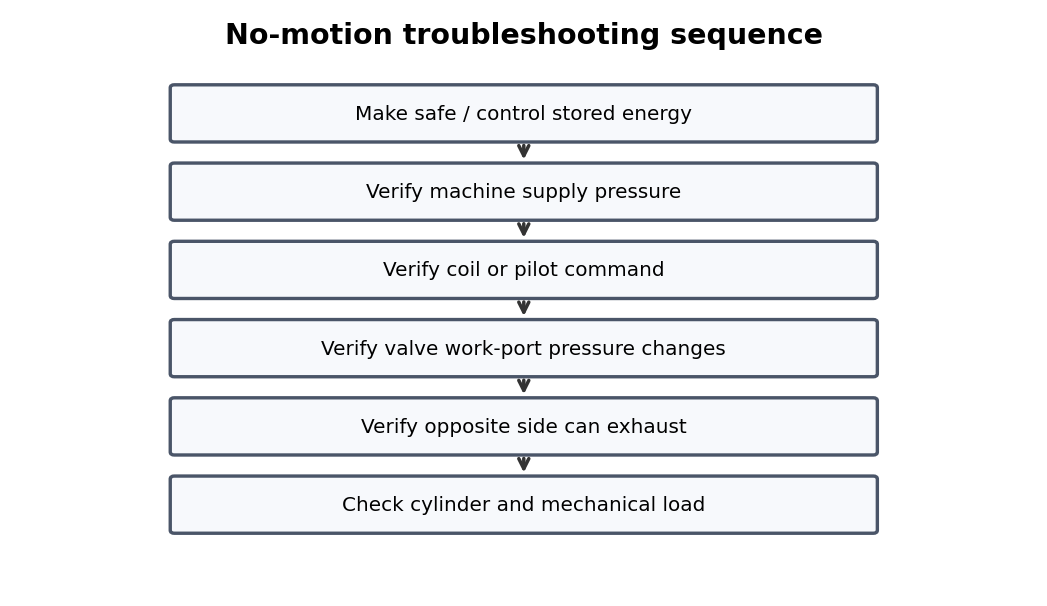
Zero machine pressure usually points to the main supply path, isolation, filter, safety dump valve, or plant system rather than individual cylinders. Symptom-based troubleshooting is fastest when the symptom is classified before parts are changed: supply problem, command problem, valve problem, restriction/exhaust problem, actuator problem, or mechanical-load problem.
What to check
- Define whether one function or the entire machine is affected.
- Compare both directions or a known-good station.
- Capture pressure and command at the moment of failure.
- Check for recent maintenance or configuration changes.
Diagnostic sequence
- Make safe and reproduce the symptom.
- Use the dedicated flowchart on this page.
- Fix the first proven abnormal condition.
- Retest at normal production speed and load.
Common mistakes
Changing settings before measuring. • Stopping after one successful cycle. • Replacing the most visible part.
FIELD RULE: Classify the symptom with measurements before choosing the repair.
Pressure Low Only During Cycling
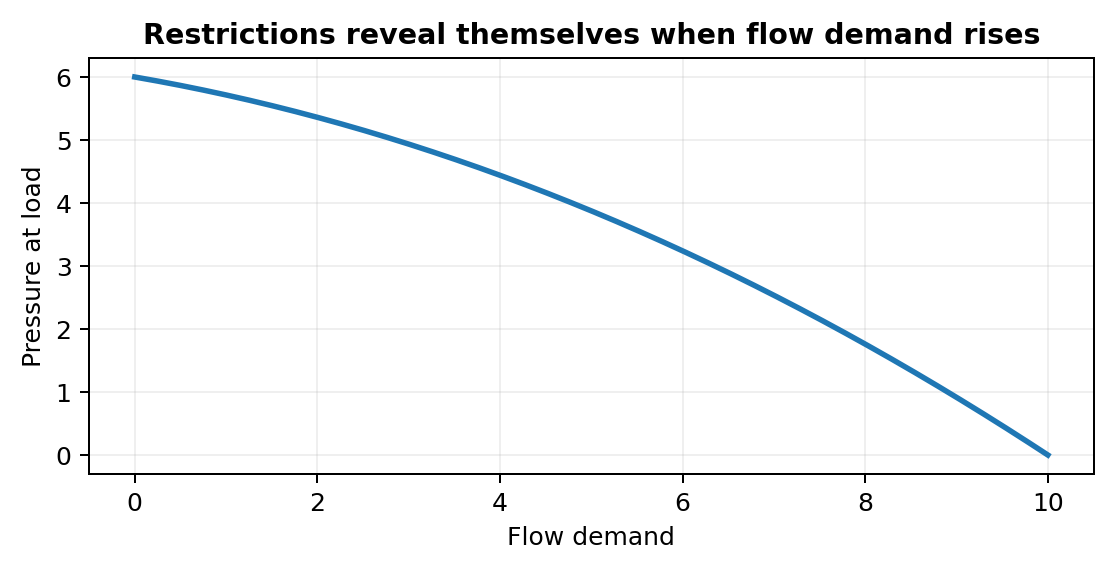
Pressure that recovers at idle points toward supply capacity or a restriction that appears only under flow. Symptom-based troubleshooting is fastest when the symptom is classified before parts are changed: supply problem, command problem, valve problem, restriction/exhaust problem, actuator problem, or mechanical-load problem.
What to check
- Define whether one function or the entire machine is affected.
- Compare both directions or a known-good station.
- Capture pressure and command at the moment of failure.
- Check for recent maintenance or configuration changes.
Diagnostic sequence
- Make safe and reproduce the symptom.
- Use the dedicated flowchart on this page.
- Fix the first proven abnormal condition.
- Retest at normal production speed and load.
Common mistakes
Changing settings before measuring. • Stopping after one successful cycle. • Replacing the most visible part.
FIELD RULE: Classify the symptom with measurements before choosing the repair.
One Cylinder Will Not Move
Port pressures during the command quickly separate valve/supply faults from actuator/load faults. Symptom-based troubleshooting is fastest when the symptom is classified before parts are changed: supply problem, command problem, valve problem, restriction/exhaust problem, actuator problem, or mechanical-load problem.
What to check
- Define whether one function or the entire machine is affected.
- Compare both directions or a known-good station.
- Capture pressure and command at the moment of failure.
- Check for recent maintenance or configuration changes.
Diagnostic sequence
- Make safe and reproduce the symptom.
- Use the dedicated flowchart on this page.
- Fix the first proven abnormal condition.
- Retest at normal production speed and load.
Common mistakes
Changing settings before measuring. • Stopping after one successful cycle. • Replacing the most visible part.
FIELD RULE: Classify the symptom with measurements before choosing the repair.
Cylinder Moves Slowly
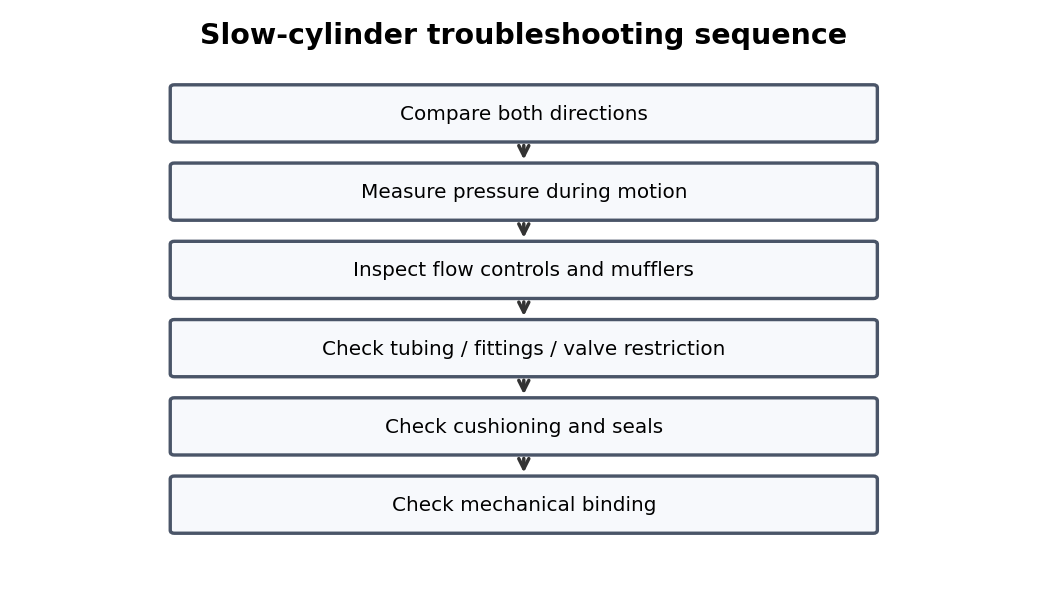
Slow motion is usually a flow, exhaust, pressure-drop, cushioning, or mechanical-friction problem. Symptom-based troubleshooting is fastest when the symptom is classified before parts are changed: supply problem, command problem, valve problem, restriction/exhaust problem, actuator problem, or mechanical-load problem.
What to check
- Define whether one function or the entire machine is affected.
- Compare both directions or a known-good station.
- Capture pressure and command at the moment of failure.
- Check for recent maintenance or configuration changes.
Diagnostic sequence
- Make safe and reproduce the symptom.
- Use the dedicated flowchart on this page.
- Fix the first proven abnormal condition.
- Retest at normal production speed and load.
Common mistakes
Changing settings before measuring. • Stopping after one successful cycle. • Replacing the most visible part.
FIELD RULE: Classify the symptom with measurements before choosing the repair.
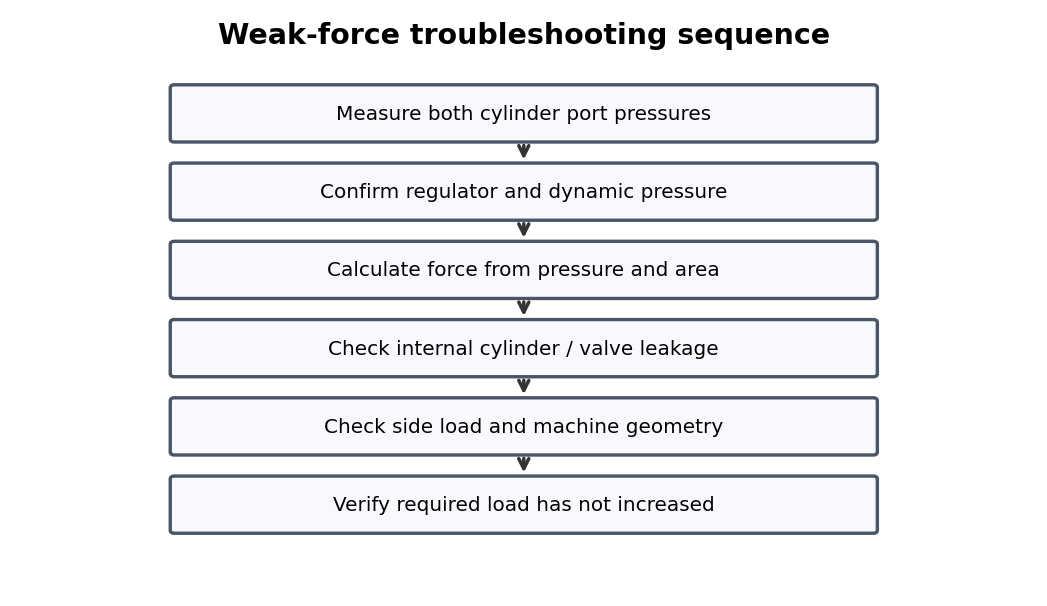
Cylinder Is Weak Under Load
A cylinder that moves unloaded but stalls in process needs pressure-difference, leakage, and load analysis. Symptom-based troubleshooting is fastest when the symptom is classified before parts are changed: supply problem, command problem, valve problem, restriction/exhaust problem, actuator problem, or mechanical-load problem.
What to check
- Define whether one function or the entire machine is affected.
- Compare both directions or a known-good station.
- Capture pressure and command at the moment of failure.
- Check for recent maintenance or configuration changes.
Diagnostic sequence
- Make safe and reproduce the symptom.
- Use the dedicated flowchart on this page.
- Fix the first proven abnormal condition.
- Retest at normal production speed and load.
Common mistakes
Changing settings before measuring. • Stopping after one successful cycle. • Replacing the most visible part.
FIELD RULE: Classify the symptom with measurements before choosing the repair.
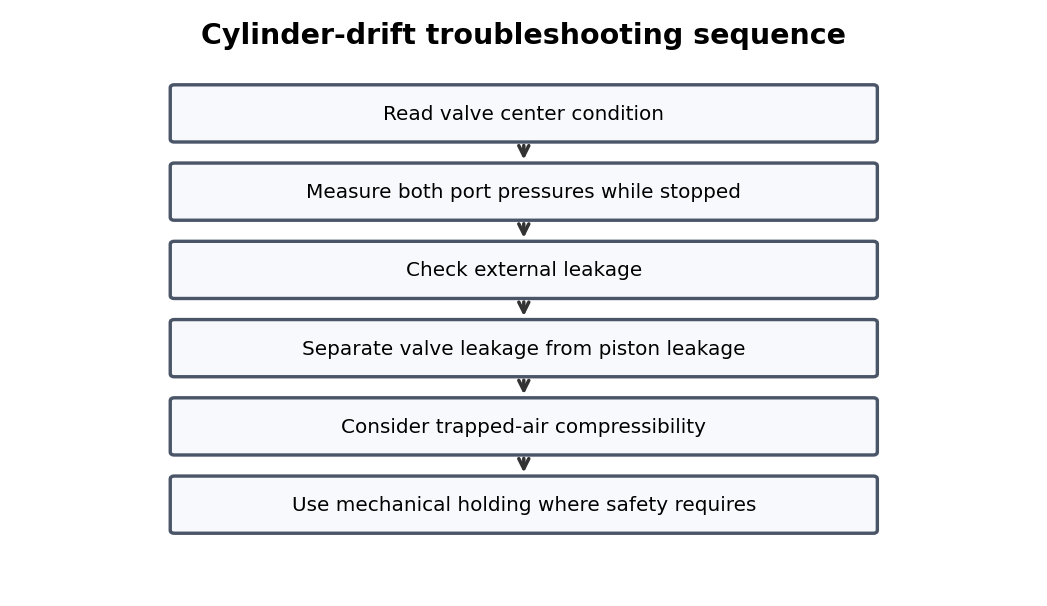
Cylinder Will Not Hold Position
Drift requires valve center condition and both valve and cylinder leakage to be separated. Symptom-based troubleshooting is fastest when the symptom is classified before parts are changed: supply problem, command problem, valve problem, restriction/exhaust problem, actuator problem, or mechanical-load problem.
What to check
- Define whether one function or the entire machine is affected.
- Compare both directions or a known-good station.
- Capture pressure and command at the moment of failure.
- Check for recent maintenance or configuration changes.
Diagnostic sequence
- Make safe and reproduce the symptom.
- Use the dedicated flowchart on this page.
- Fix the first proven abnormal condition.
- Retest at normal production speed and load.
Common mistakes
Changing settings before measuring. • Stopping after one successful cycle. • Replacing the most visible part.
FIELD RULE: Classify the symptom with measurements before choosing the repair.
Jerky or Stick-Slip Motion
Jerky motion often combines poor meter-out control with seal stiction or mechanical side load. Symptom-based troubleshooting is fastest when the symptom is classified before parts are changed: supply problem, command problem, valve problem, restriction/exhaust problem, actuator problem, or mechanical-load problem.
What to check
- Define whether one function or the entire machine is affected.
- Compare both directions or a known-good station.
- Capture pressure and command at the moment of failure.
- Check for recent maintenance or configuration changes.
Diagnostic sequence
- Make safe and reproduce the symptom.
- Use the dedicated flowchart on this page.
- Fix the first proven abnormal condition.
- Retest at normal production speed and load.
Common mistakes
Changing settings before measuring. • Stopping after one successful cycle. • Replacing the most visible part.
FIELD RULE: Classify the symptom with measurements before choosing the repair.
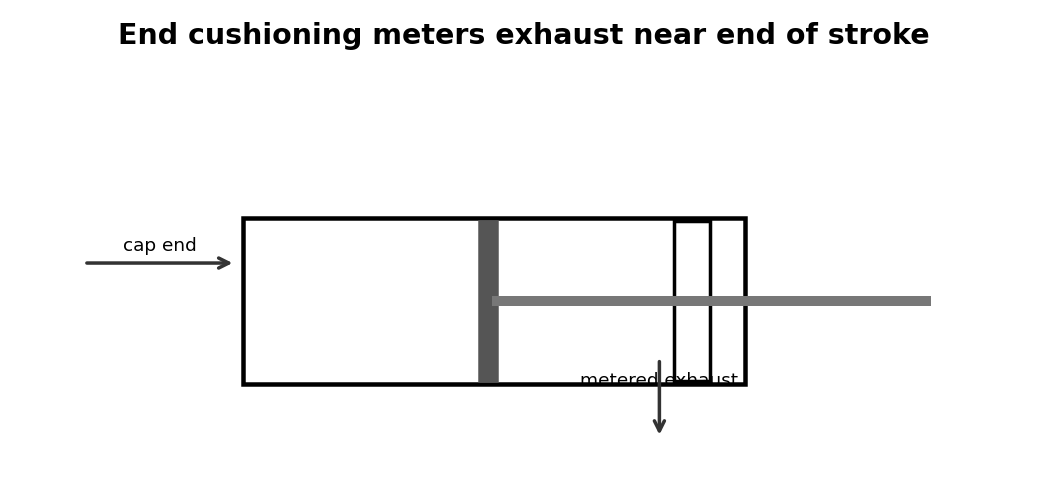
Cylinder Slams at End of Stroke
Excess speed, load energy, or poor cushion adjustment causes damaging end impact. Symptom-based troubleshooting is fastest when the symptom is classified before parts are changed: supply problem, command problem, valve problem, restriction/exhaust problem, actuator problem, or mechanical-load problem.
What to check
- Define whether one function or the entire machine is affected.
- Compare both directions or a known-good station.
- Capture pressure and command at the moment of failure.
- Check for recent maintenance or configuration changes.
Diagnostic sequence
- Make safe and reproduce the symptom.
- Use the dedicated flowchart on this page.
- Fix the first proven abnormal condition.
- Retest at normal production speed and load.
Common mistakes
Changing settings before measuring. • Stopping after one successful cycle. • Replacing the most visible part.
FIELD RULE: Classify the symptom with measurements before choosing the repair.
Valve Clicks but No Motion
A click does not prove the main spool routed pressure or that pilot pressure was adequate. Symptom-based troubleshooting is fastest when the symptom is classified before parts are changed: supply problem, command problem, valve problem, restriction/exhaust problem, actuator problem, or mechanical-load problem.
What to check
- Define whether one function or the entire machine is affected.
- Compare both directions or a known-good station.
- Capture pressure and command at the moment of failure.
- Check for recent maintenance or configuration changes.
Diagnostic sequence
- Make safe and reproduce the symptom.
- Use the dedicated flowchart on this page.
- Fix the first proven abnormal condition.
- Retest at normal production speed and load.
Common mistakes
Changing settings before measuring. • Stopping after one successful cycle. • Replacing the most visible part.
FIELD RULE: Classify the symptom with measurements before choosing the repair.
Valve Will Not Release
Residual voltage, a latched manual override, bistable design, sticky spool, or trapped pilot pressure can keep a valve shifted. Symptom-based troubleshooting is fastest when the symptom is classified before parts are changed: supply problem, command problem, valve problem, restriction/exhaust problem, actuator problem, or mechanical-load problem.
What to check
- Define whether one function or the entire machine is affected.
- Compare both directions or a known-good station.
- Capture pressure and command at the moment of failure.
- Check for recent maintenance or configuration changes.
Diagnostic sequence
- Make safe and reproduce the symptom.
- Use the dedicated flowchart on this page.
- Fix the first proven abnormal condition.
- Retest at normal production speed and load.
Common mistakes
Changing settings before measuring. • Stopping after one successful cycle. • Replacing the most visible part.
FIELD RULE: Classify the symptom with measurements before choosing the repair.
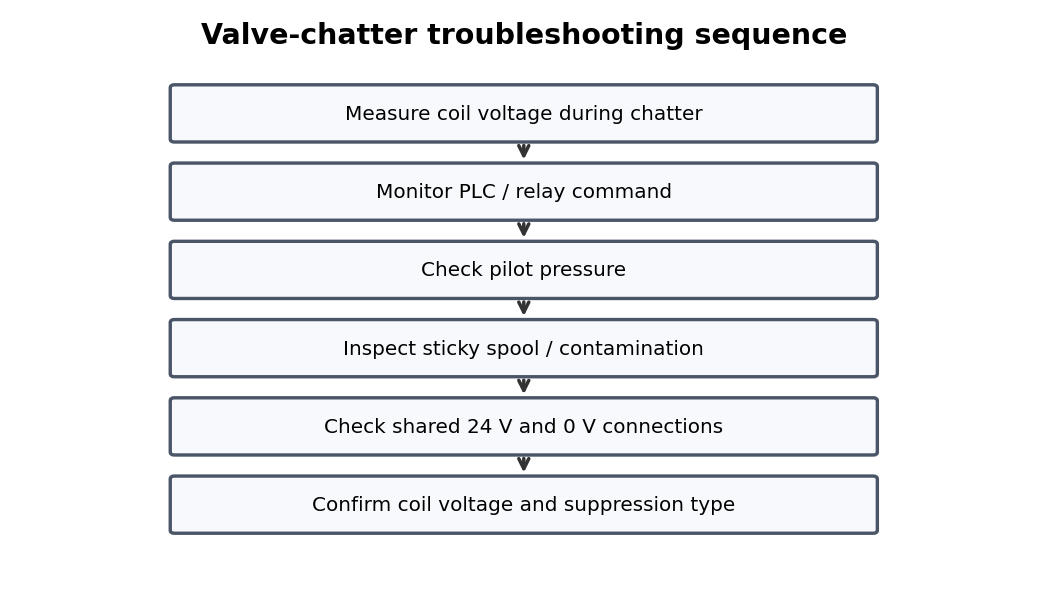
Valve Chatters Rapidly
Electrical command stability and pilot/supply pressure must be observed during the chatter itself. Symptom-based troubleshooting is fastest when the symptom is classified before parts are changed: supply problem, command problem, valve problem, restriction/exhaust problem, actuator problem, or mechanical-load problem.
What to check
- Define whether one function or the entire machine is affected.
- Compare both directions or a known-good station.
- Capture pressure and command at the moment of failure.
- Check for recent maintenance or configuration changes.
Diagnostic sequence
- Make safe and reproduce the symptom.
- Use the dedicated flowchart on this page.
- Fix the first proven abnormal condition.
- Retest at normal production speed and load.
Common mistakes
Changing settings before measuring. • Stopping after one successful cycle. • Replacing the most visible part.
FIELD RULE: Classify the symptom with measurements before choosing the repair.
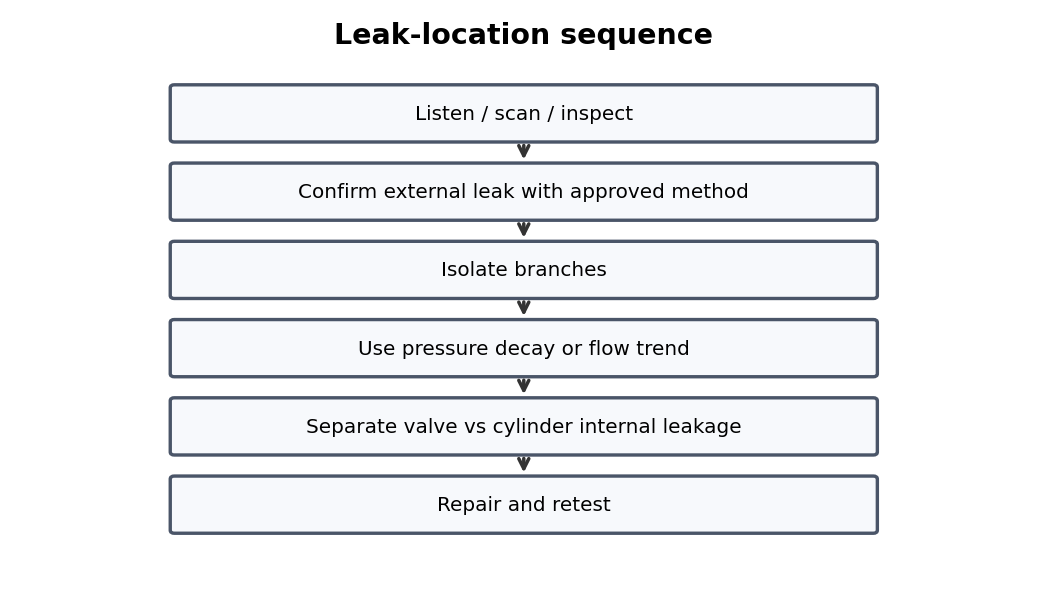
Continuous Leak from Exhaust
Exhaust leakage can originate in the valve, piston seals, or pilot circuit and must be isolated before replacement. Symptom-based troubleshooting is fastest when the symptom is classified before parts are changed: supply problem, command problem, valve problem, restriction/exhaust problem, actuator problem, or mechanical-load problem.
What to check
- Define whether one function or the entire machine is affected.
- Compare both directions or a known-good station.
- Capture pressure and command at the moment of failure.
- Check for recent maintenance or configuration changes.
Diagnostic sequence
- Make safe and reproduce the symptom.
- Use the dedicated flowchart on this page.
- Fix the first proven abnormal condition.
- Retest at normal production speed and load.
Common mistakes
Changing settings before measuring. • Stopping after one successful cycle. • Replacing the most visible part.
FIELD RULE: Classify the symptom with measurements before choosing the repair.
Fault After Long Idle
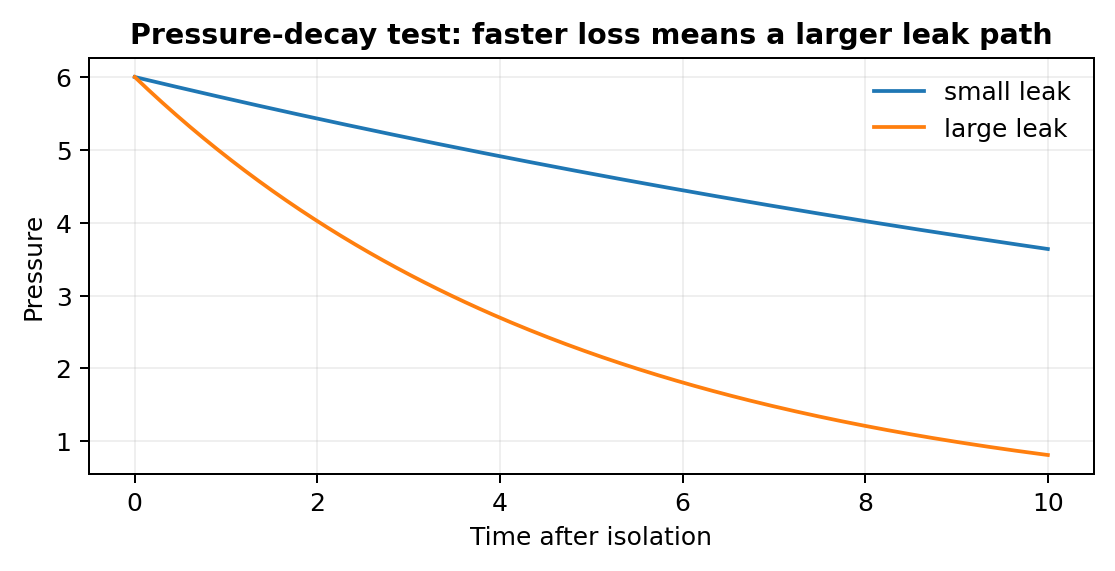
Water, seal stiction, sticky spools, and pressure decay often appear on the first cycle after a long stop. Symptom-based troubleshooting is fastest when the symptom is classified before parts are changed: supply problem, command problem, valve problem, restriction/exhaust problem, actuator problem, or mechanical-load problem.
What to check
- Define whether one function or the entire machine is affected.
- Compare both directions or a known-good station.
- Capture pressure and command at the moment of failure.
- Check for recent maintenance or configuration changes.
Diagnostic sequence
- Make safe and reproduce the symptom.
- Use the dedicated flowchart on this page.
- Fix the first proven abnormal condition.
- Retest at normal production speed and load.
Common mistakes
Changing settings before measuring. • Stopping after one successful cycle. • Replacing the most visible part.
FIELD RULE: Classify the symptom with measurements before choosing the repair.
Fault Only at High Production Speed
High-speed operation exposes weak flow margin, overlapping air demand, poor exhaust capacity, and marginal sensor timing. Symptom-based troubleshooting is fastest when the symptom is classified before parts are changed: supply problem, command problem, valve problem, restriction/exhaust problem, actuator problem, or mechanical-load problem.
What to check
- Define whether one function or the entire machine is affected.
- Compare both directions or a known-good station.
- Capture pressure and command at the moment of failure.
- Check for recent maintenance or configuration changes.
Diagnostic sequence
- Make safe and reproduce the symptom.
- Use the dedicated flowchart on this page.
- Fix the first proven abnormal condition.
- Retest at normal production speed and load.
Common mistakes
Changing settings before measuring. • Stopping after one successful cycle. • Replacing the most visible part.
FIELD RULE: Classify the symptom with measurements before choosing the repair.
Several Cylinders Fail Together
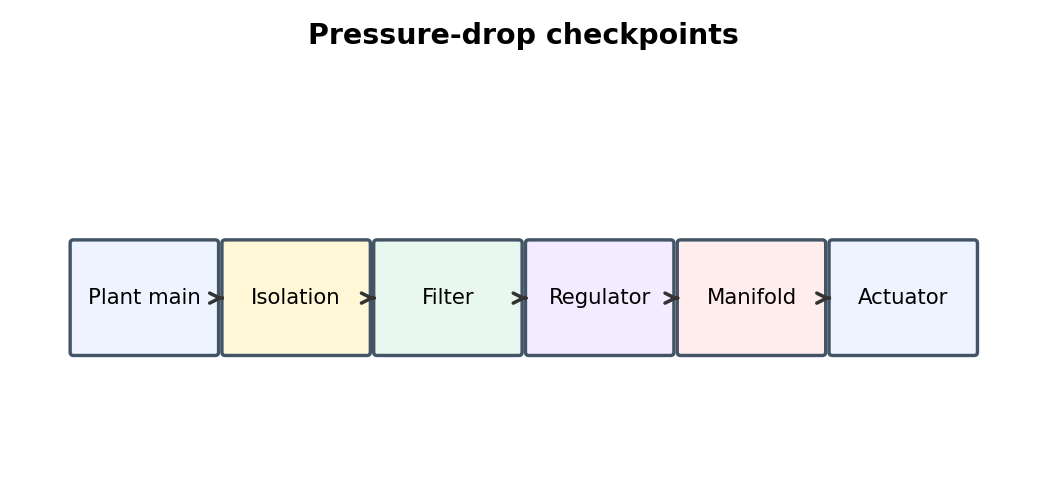
Simultaneous faults point toward shared supply, manifold, exhaust, or control power. Symptom-based troubleshooting is fastest when the symptom is classified before parts are changed: supply problem, command problem, valve problem, restriction/exhaust problem, actuator problem, or mechanical-load problem.
What to check
- Define whether one function or the entire machine is affected.
- Compare both directions or a known-good station.
- Capture pressure and command at the moment of failure.
- Check for recent maintenance or configuration changes.
Diagnostic sequence
- Make safe and reproduce the symptom.
- Use the dedicated flowchart on this page.
- Fix the first proven abnormal condition.
- Retest at normal production speed and load.
Common mistakes
Changing settings before measuring. • Stopping after one successful cycle. • Replacing the most visible part.
FIELD RULE: Classify the symptom with measurements before choosing the repair.
Fault Immediately After Repair
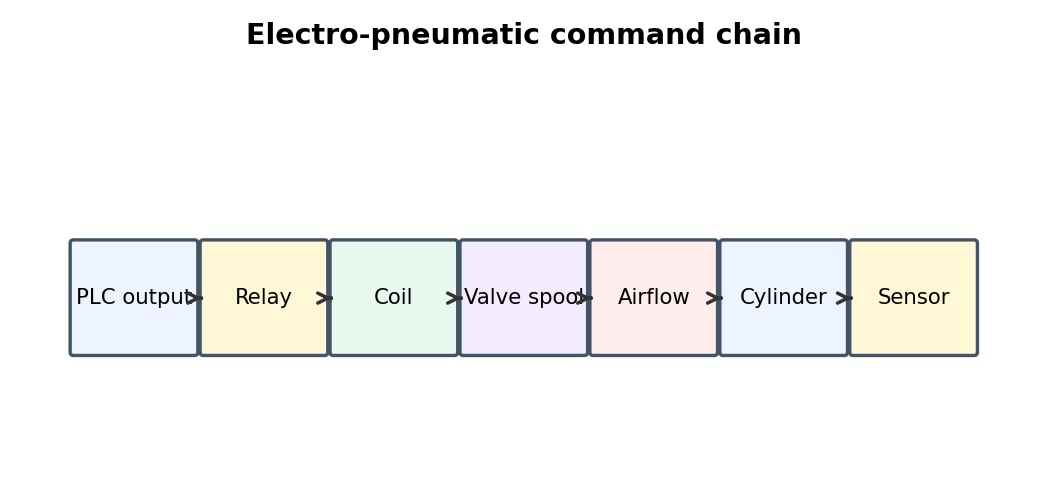
The first suspect after a repair-created fault is wrong function, wrong porting, wrong coil, reversed flow control, or a smaller flow path. Symptom-based troubleshooting is fastest when the symptom is classified before parts are changed: supply problem, command problem, valve problem, restriction/exhaust problem, actuator problem, or mechanical-load problem.
What to check
- Define whether one function or the entire machine is affected.
- Compare both directions or a known-good station.
- Capture pressure and command at the moment of failure.
- Check for recent maintenance or configuration changes.
Diagnostic sequence
- Make safe and reproduce the symptom.
- Use the dedicated flowchart on this page.
- Fix the first proven abnormal condition.
- Retest at normal production speed and load.
Common mistakes
Changing settings before measuring. • Stopping after one successful cycle. • Replacing the most visible part.
FIELD RULE: Classify the symptom with measurements before choosing the repair.
Appendix B – No-Motion Checklist
- Machine safe / stored energy controlled.
- Machine supply pressure present.
- Dump valve fully enabled.
- Coil voltage or pilot command present.
- Valve work-port pressure changes.
- Opposite cylinder chamber exhausts.
- Cylinder and mechanism are free to move.
USE IT: Add machine-specific target pressures, cycle times, and test points to this page.
Continue the series
- Previous chapter: Pneumatic Diagnostic Tools And Test Methods
- Next chapter: Pneumatic Contamination And Reliability
- Browse all Pneumatic Troubleshooting chapters
Adapted from Pneumatic Troubleshooting for Maintenance Technicians, by Dovydas Kersys. © 2026 Dovydas Kersys. Featured cover image is an AI-generated editorial illustration.