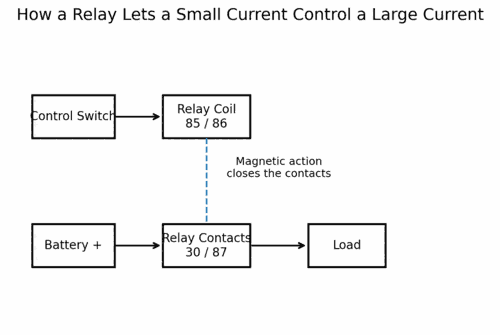
A relay uses a small control current to switch a larger load current. It typically contains a coil and a set of contacts. When the coil is energized, magnetic force moves the contacts and connects the high-current circuit.
Hearing a relay click only proves that something moved. The contacts may still be burned, the high-current feed may be missing, or the load side may have an open circuit. Likewise, a relay that does not click may have a bad coil or may simply not be receiving the command it needs.
What to Look For
Compare both sides of the circuit whenever possible. Two similar lamps, two power windows, or left and right wheel sensors can provide a useful reference when one side behaves differently.
Basic relay diagnosis checks the coil side and the contact side separately. Common terminal numbers on many automotive relays are 30 for battery feed, 87 for switched output, and 85/86 for the coil, but do not assume every relay follows the same layout—check the diagram printed on the relay or the vehicle wiring information.
Swapping a relay with an identical known-good relay can be a quick test when the vehicle design allows it, but confirm the part numbers and circuit requirements first.
Beginner Diagnostic Checklist
- Verify the exact symptom before touching anything.
- Check battery condition and obvious power/ground connections when relevant.
- Check the correct fuse and connector condition.
Stop and get help if: wiring is overheating, smoking, melting, or repeatedly blowing a high-current fuse.