Replacing the battery can temporarily hide the real problem if the vehicle is not charging correctly or if something continues to consume power after shutdown. A new battery is simply a larger reserve; it is not a repair for an unresolved electrical drain.
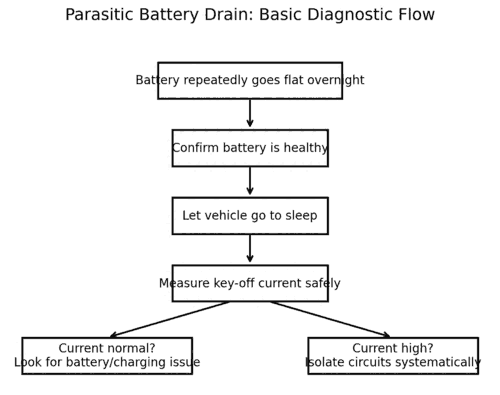
If the battery repeatedly goes flat, establish a timeline. Does it happen overnight, after several days, only after short journeys, or mostly in cold weather? Does the vehicle have aftermarket equipment such as a dash camera, tracker, amplifier, alarm, remote-start system, or USB accessory? Has any repair been performed recently?
What to Look For
Compare both sides of the circuit whenever possible. Two similar lamps, two power windows, or left and right wheel sensors can provide a useful reference when one side behaves differently.
Then verify battery health and charging performance before measuring parasitic draw. A weak alternator or frequent short trips can leave the battery undercharged without any abnormal key-off drain.
When a parasitic draw is suspected, the vehicle must be allowed to enter its normal sleep state. Opening doors, waking modules, or pulling fuses carelessly can change current consumption and make the test misleading.
Beginner Diagnostic Checklist
- Verify the exact symptom before touching anything.
- Check battery condition and obvious power/ground connections when relevant.
- Check the correct fuse and connector condition.
Stop and get help if: wiring is overheating, smoking, melting, or repeatedly blowing a high-current fuse.